
Every pharmaceutical product demands extreme control in its manufacturing. For injections, even more so. Any error in dimensions can lead to serious health hazards. From injuries to fatal infections, an improper injection has many dangerous potential consequences. For the pharmaceutical companies, partnering with injection manufacturers is a strategic necessity. Not only does it save money, but it also enables faster entry into the market, gains a competitive edge and provides access to a manufacturing infrastructure that they cannot build in-house. However, this outsourcing also means the company is entrusting the manufacturer with some key responsibilities. Selecting a third-party manufacturer of injectable requires a thorough examination and close attention.
Points to Note While Selecting Injection Manufacturers
Verifying Regulatory Licenses
Injection manufacturing is a highly sophisticated process, as it deals with minute dimensions and tight tolerances. The WHO and CDSCO guidelines cover the various injection dosage forms. To verify the scope of approval of the injection manufacturers, look for aseptic filling lines, sterilization processes, and packaging areas. Beyond this, the audit history also matters. It reflects corrective actions and readiness to adhere to the regulations.
Aseptic Infrastructure
An aseptic infrastructure means the filling lines are appropriate, air change rates, pressure differentials, HEPA filtration, and other environmental controls are in place to prevent contamination. The manufacturer must have a well-designed cleanroom, monitoring systems, and physical segregation in a multi-product facility.
Systematic Approach
In the systematic approach to injection manufacturing, all the operations are governed by written Standard Operating Procedures (SOPs). They are supported by detailed records of each batch of production. The release should be governed by the quality unit, not dictated by the product timelines. The standard procedures are designed in such a way that there is hardly any deviation from the committed timeline.
Long-Term Partnership Mindset
When partnering with the injection manufacturers, the brands look not just for a short-term team project but a long-term partnership. The manufacturer should be flexible and have sufficient capacity to upscale the production, or change according to new business demands.
Technology Transfer
Technology transfer is the bridge between development and commercial production. The key elements of it are injectable product knowledge, process understanding, analytical method transfer, equipment and facility matching, documentation and validation. The manufacturer should demonstrate experience in handling all this vital information and critical phases.
Confidentiality of Formulations
Injection formulations are the intellectual property of the pharmaceutical companies. No company wants its property to be misused. Hence, the injection manufacturers must keep the information confidential and follow the contractual agreements strictly. The agreement defines ownership of formulations, processes, and market information.
Conclusion
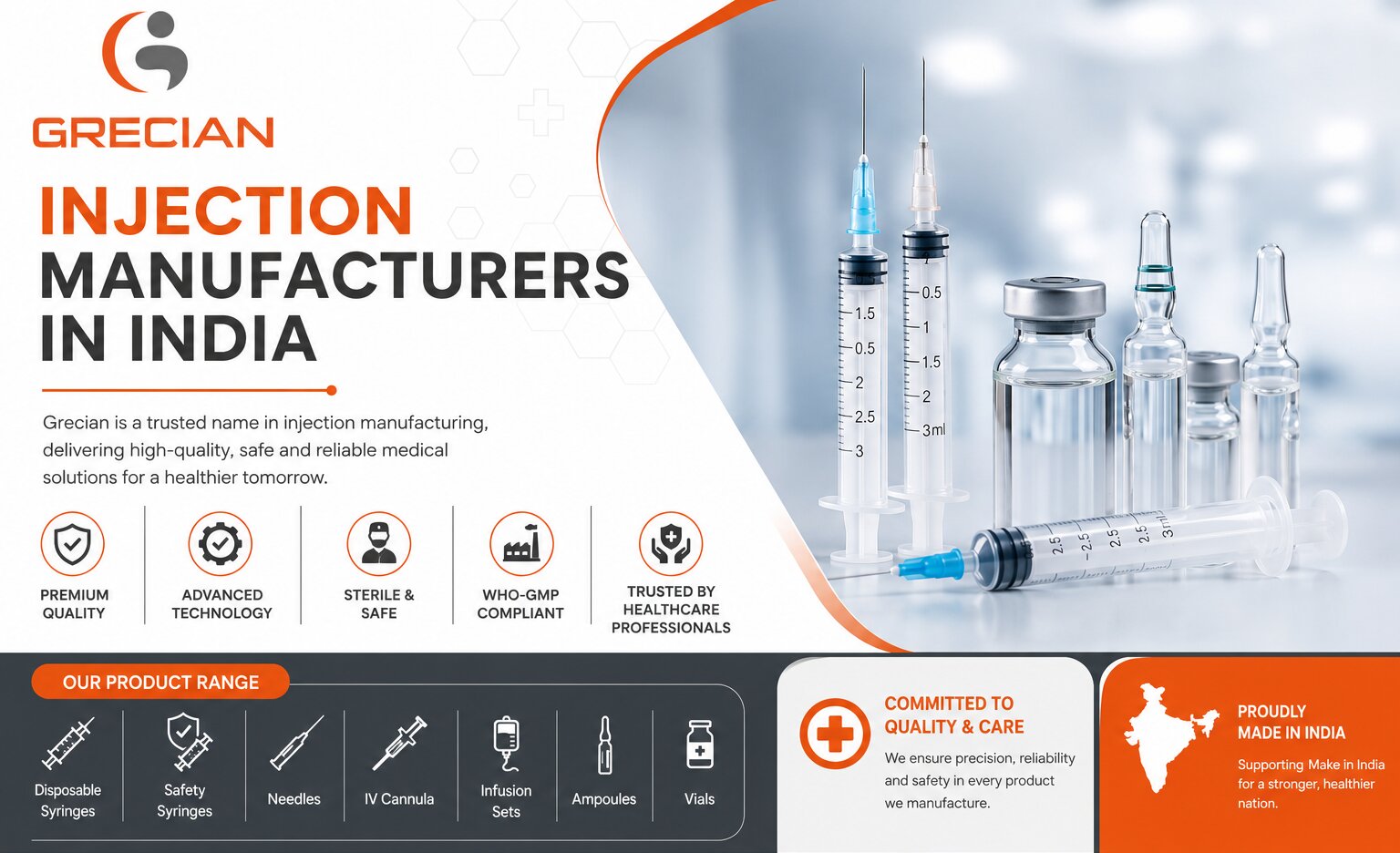
Given the deep technicalities, choosing the injection manufacturers is a critical decision. But all these factors are required to be followed thoroughly. Once the best manufacturers are shortlisted, compare their services, past project portfolio and manufacturing capacity. Look for the scope of manufacturing and approvals to know whether the chosen third-party manufacturer is the right one. Grecian Pvt Ltd is a trusted name in the injection manufacturing domain. Partner with us to get the services you seek.